20 years after launching, Denver Preschool Program has big plans
Denverite
Camelia Heins ·
An expanded program will support caregivers, infants and toddlers.
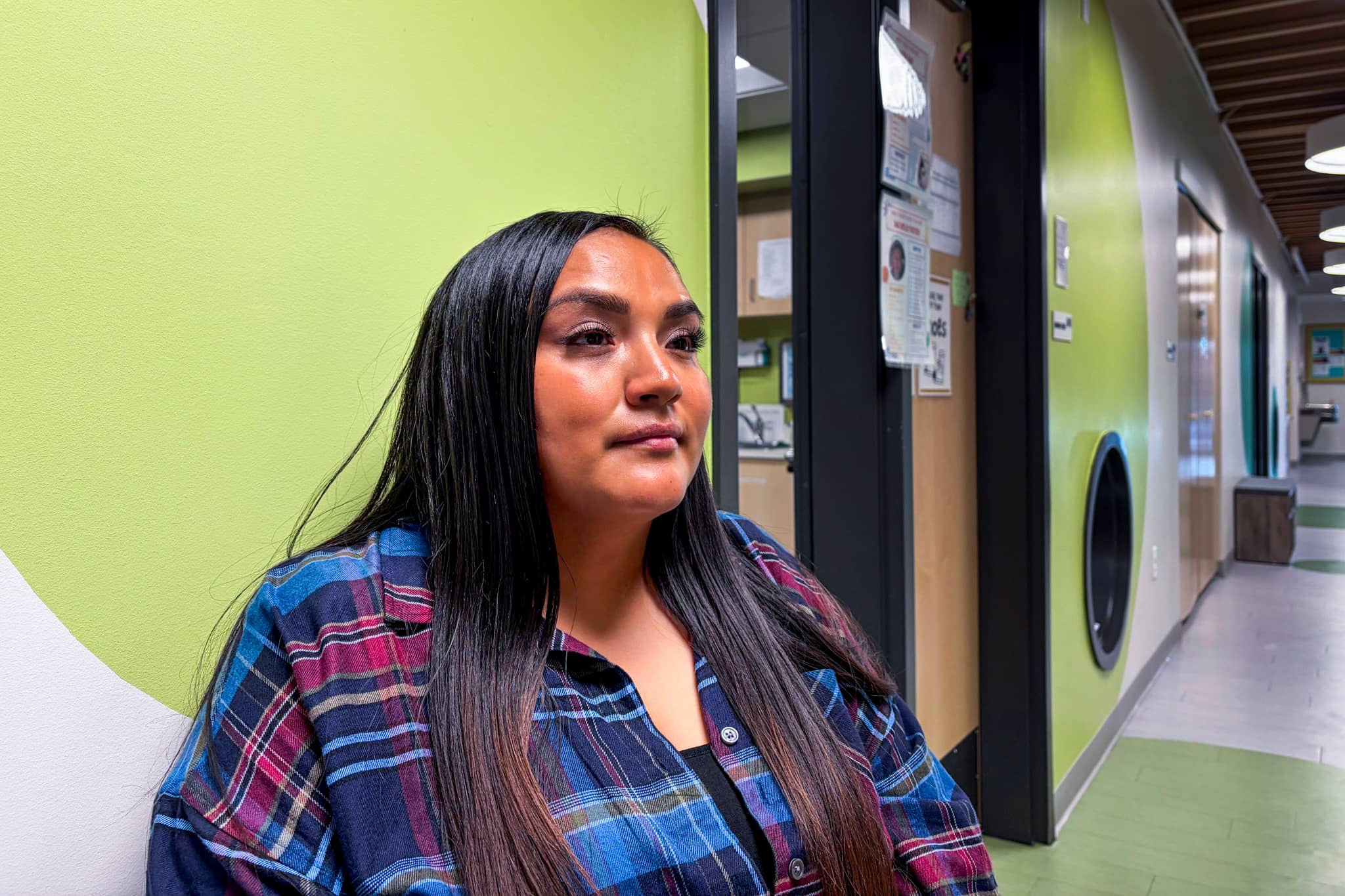
Before Lynn Shangreaux, 31, secured childcare through the Denver Preschool Program, she was relying on family and friends for support with her son, Major, who is 6 months old.
Now, Shangreaux is one of the first parents to join DPP’s newest pilot program for infants and toddlers. Her son is one of eight children who have benefited from the new program in the last six months, which now has a growing waitlist of over 50 more kids.
“I feel like once the parents are doing good and able to get off their feet, it helps the family and the kids as a whole, as a community,” Shangreaux told Denverite.
Twenty years after its founding, the tax-funded nonprofit is looking to help more families like Shangreaux’s. It is funding care for babies like Major for the first time. Another experimental effort will provide money for family, friends and neighbors who care for kids.
It’s all part of a plan for DPP to expand into a new umbrella organization, First Step Collective, that will provide a one-stop shop for childcare needs.
“Our vision is that families will come to one place, make one phone call, one application and we will help them find a provider,” said Elsa Holguin, DPP’s president and CEO. “We will help them figure out how to pay and we’ll be there to support them.”
The two new pilot programs are expected to continue through 2027 and may expand in 2028.
Celebrating 20 years, and 20 more
Shangreaux said the infant program has been a “stepping stone” toward her return to school for social work — and toward financial stability.
“It takes a village to raise the kids,” she said. “And I really feel like us being able to go back to school and get that education helps us educate our kids as well.”
Shangreaux said the program has been a “blessing,” teaching her how to feed Major well and providing clothes, diapers and books.
The program has distributed around $270 million in tuition support since its founding, with sliding-scale assistance available for Denver families at all income levels. Roughly 83,000 children have benefited from the program, which was first approved by Denver voters in 2006 and made permanent in 2023. It’s funded by local sales taxes.
Today, DPP’s first cohort is all grown up, with many graduating from college and trade schools. Within 10-20 years, that first cohort could have their own kids, and Holguin hopes they can look to DPP’s future programs for support.
“The notion that we believe that every child in the city should have access to high quality preschool, and that they should be able to access that whether they can afford to pay for it or not, was at the time a revolutionary idea,” Mayor Mike Johnston said at an event on Thursday. “Now 20 years later, you have seen this city gradually take steps to say, ‘This is amazing and we believe we can do more.’”
Johnston has his own plans for “universal childcare” in the city, with a possible pilot program launching as soon as August .
Some see Denver as a model
Holguin said DPP has become a national model.
“We’re at a point where other communities send delegations to Denver to come and study the model,” she said. “And the delegations typically include mayors, superintendents, teachers, early childhood champions. We’re in high demand to come in and see what does this look like.”
Other communities have followed with their own local funding initiatives. Earlier this month, Boulder County voters approved a ballot measure to increase funding for early childhood care and education. And the state itself has implemented a “universal” preschool program that provides funding for partial-day preschool in the year before kindergarten.
“I think we’re feeling the energy and the momentum to say we are going to invest because not only do we believe this is a great multigenerational return that helps the child and helps the parent, but because we can see the results,” she said.
Source
Denverite