Opinion: Fear in the Hallways, Cuts in the Budget: The Real Cost of Targeting Immigrants
The 74
Judíth Huerta ·

Nearly 20 years ago, Oklahoma adopted what was then the strictest anti-immigrant bill in the country. House Bill 1804 aimed to eliminate public funding and jobs for undocumented immigrants, pushed police officers to check folks’ immigration status and made it a felony to harbor and transport undocumented individuals. Though most of its provisions turned out
Nearly 20 years ago, Oklahoma adopted what was then the strictest anti-immigrant bill in the country. House Bill 1804 aimed to eliminate public funding and jobs for undocumented immigrants, pushed police officers to check folks’ immigration status and made it a felony to harbor and transport undocumented individuals. Though most of its provisions turned out to be superfluous , because of previously implemented federal legislation, its real purpose was to institute fear in the undocumented community.
Many Oklahomans remember the distinct feeling of schools, businesses and communities feeling quieter and lonelier. The community grew wary of the police, schools fretted about dropping enrollment numbers harming their budgets, and fewer people were out on the streets simply existing.
Get stories like this delivered straight to your inbox. Sign up for The 74 Newsletter
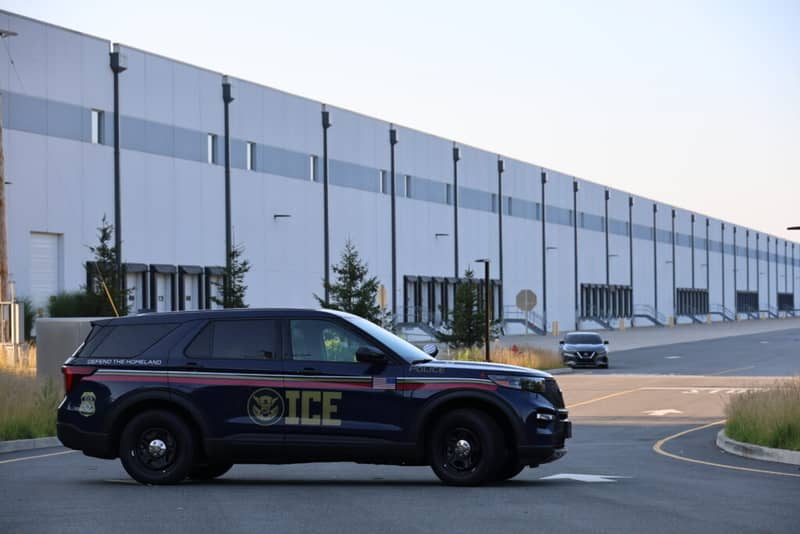
Since the spring of 2025, we’ve experienced a disturbing flashback. With ICE terrorizing immigrant families , distrust of law enforcement is amplified; schools scramble to avoid becoming too politically involved and pay close attention to enrollment; and — again — fewer people are out on the streets participating in the joys that come with living freely in their communities.
This appalling situation is creating money problems for schools. When people are afraid to step out in their communities, they work less, they buy less and pay fewer taxes. When students are afraid to come to school, we see the domino effect where absences rise and enrollment drops, taking schools’ budgets down with them. That’s even more consequential in a moment when the U.S. Department of Education is facing cuts and unraveling key programs supporting public schools.
Every day, teachers like me are privy to the emotional turmoil from students, past and present, who have had a loved one detained or deported. We’ve heard politicians claim that newcomers and English Learners drain resources from K–12 schools. But the reality is that persecuting immigrant families leads to shrinking communities and dropping enrollment, and those reduce school budgets today and economic growth both now and in the future.
This new school year brings a concrete example of that problem: How much English language acquisition funding will Oklahoma school districts receive as enrollments drop? How will school leaders manage with that smaller pot of money?
Related The Latest Wave of Trump’s Immigration Crackdown Is Again Being Felt in Schools
We already know. There will be additional cuts, consolidations and closings — all of which create more resource imbalance. Cuts mean fewer positions like mine and more pressure on remaining teachers. I’m an English language development teacher, so I’m responsible for teaching English to newcomers, students who have been in the country for three years or less.
The unpredictable changes to border policies and intensified, violent immigration enforcement activities recently upended the lives of many of our families. That means fewer students enrolled at our school this year and last year. In previous years, I would start with four classes of 15 to 20 newcomers, whereas this year I started with one class of eight students. And these numbers don’t encompass the other students who didn’t return this school year due to a deportation in the family.
This reduction in numbers completely changed how our building’s 10 ELD teachers operated. Last year, we shifted schedules in the first few weeks because there were classes with no kids. That initially had a silver lining: we finally had enough capacity to fully serve our long-term English learners, or students who have been enrolled in US schools for five or more years and have not “tested” out or been reclassified as fluent in academic English. Unfortunately, budgets shrank to match the reduced enrollment, reducing our staff from 10 ELD teacher positions to four. We also lost a whole team of teachers in ELA, math, science and social studies.
Instability in the Education Department creates even deeper headaches. At the beginning of the 2025–26 school year, the Trump administration tried to withhold the federal Title III dollars that support English language learning in districts like ours all over the country. Oklahoma generally receives around $6.5 million through this program each year.
The sudden freezing of those funds prompted panicked changes to services in many districts: Our leadership cut the English language services department’s facilitator role. By the time the funding was released , it was too late. No retractions were made that year, and those facilitators left or were reassigned to different positions.
Related States in ‘Triage Mode’ Over $6B in Withheld K-12 Funding
This was a disaster for our schools, teachers and students. These facilitators provided continuity and stability to our curriculum and instruction via data-driven practices and ongoing professional coaching for all teachers who work with ELs. More importantly, they paved the way in advocacy efforts for these students across all departments and in buildings across our district. Without coordination at the district level, support for students’ English learning evaporated. This year, we’re stuck playing catchup, attempting to rebuild what was lost.
Our communities deserve better than this. Short-sighted immigration enforcement changes that target families and their children for intimidation, detention and deportation shrink our schools and stifle our communities. When the federal government unilaterally decides not to send Oklahoma the education funding it owes, it further destabilizes our educators and administrators, disintegrating systems created to help support some of our most marginalized students.
None of this makes our schools better. Students learn better in spaces where they feel safe and supported. Steady, reliable public education funding is instrumental for creating welcoming spaces for all students and families to walk through our school doors ready to learn. That’s good for them, for our schools, for our communities, for Oklahoma, and across the nation.
Source
The 74