Tear down this mall, Mr. Johnston-chev? $100K study calls for demolishing most of Denver Pavilions
Denverite
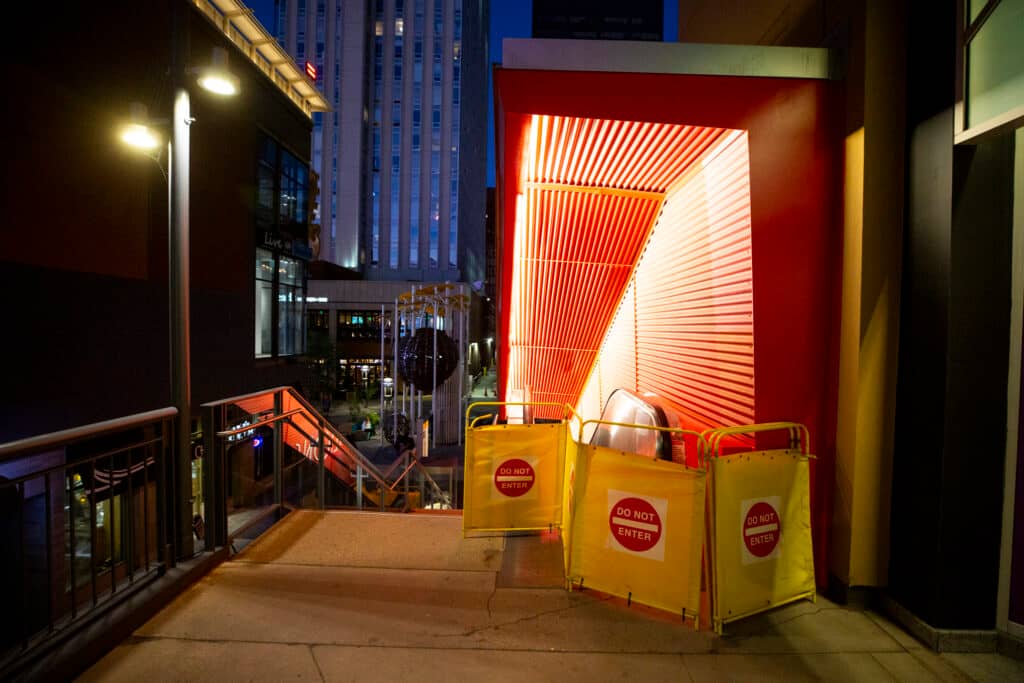
A panel of national experts recommends a $615 million redo of the canyon-shaped mall.
The wrecking ball could be coming for Denver Pavilions … eventually.
The shopping center was once the heart of 16th Street. But today it “is a 1998 building serving a 2026 downtown that has fundamentally changed,” states a new report funded by the Denver Downtown Development Authority.
The report argues that most of the multi-level outdoor mall should be torn down, opening up two downtown blocks for dense development and a brand new park.
“An exterior three-story shopping mall is not exactly where the world’s going today,” said Bill Mosher, a top adviser to Mayor Mike Johnston, who helped to commission the report.
The report was produced by the nonprofit Urban Land Institute and a national panel of development experts.
Only 4DX can stay
The proposal is far from a sure thing, but it signals growing momentum for dramatic changes at the site, which once was home to Uniqlo, Banana Republic, Victoria’s Secret and generations of teenage angst.
The panel’s recommendation would only preserve the building that houses a Regal movie theater and other businesses.
The downtown authority bought the mall nearly a year ago for $45 million and adjacent parking lots for $23 million. City officials have signaled for months that big changes could be in the offing, which the new report drives home.
“Re-tenanting the Pavilions in its current form is unlikely to revitalize Upper Downtown. The property’s inward-facing and multi-level format, combined with a broad-based and structural decline across retail, food and beverage, and entertainment tenants foreclose a conventional retail strategy,” the report states.
What the new Pavilions could look like
Instead, the local government’s purchase has created a “rare opportunity” to redevelop two full blocks of Upper Downtown, according to the report.
The panel found that residential development, parks and a carefully curated set of tenants could be the best fit for the site.
A large new public space — maybe with the rooftop “Denver Pavilions” sign as a centerpiece — could make downtown more attractive for the 35,000 residents the city hopes to bring downtown . That includes perhaps 1,200 housing units on the Pavilions site alone.
It could cost anywhere from $498 million to $615 million to demolish, renovate and redevelop various parts of the site, the panel estimated.
No big moves, yet
Mosher cautioned that the city is far from having a confirmed plan for the site — much less knocking down, say, Coyote Ugly.
Even once a developer is selected, it will take three to five years for redevelopment to start, Mosher said. High interest rates and general economic uncertainty are likely to delay development, too.
“We’re not just going to tear down buildings to tear down buildings without having a redevelopment strategy,” he said.
The property is about 61% occupied. The authority has pushed to bring in new tenants for pop-up exhibits and temporary stores, while other leases extend five years or more into the future.
“I can tell you that everybody is doing better with the opening of the 16th Street Mall, and just downtown is feeling better overall. And so we’re walking a line between activating Pavilions, which is a major anchor of Upper Downtown, and trying to keep it as active as possible and make the tenants as successful as possible, and looking at long-term redevelopment options.”
Still, the authority is talking to developers and exploring options for residential and hotel development, Mosher said.
The ULI panel recommended that the authority hold onto the property for now, as opposed to selling it to a developer or other business. The Pavilions itself has 350,000 square feet of commercial space, with four buildings connected by walkways and escalators, while the neighboring surface parking lots are about 66,500 square feet.
Regardless, a new Pavilions for a new downtown
Mosher thinks the area is in a time of change after the COVID-19 pandemic, which drove office workers out of downtown and flipped the area’s economy on its head. Still, he said, it’s likely some core of the old mall will survive.
“COVID just accelerated both the need and the push to make Upper Downtown into a more vibrant neighborhood,” he said.
The Pavilions will likely continue to “be some sort of center of activity, whether it’s entertainment or restaurant. The 16th Street Mall is too active. It’s too close to the convention center, all the hotels and residential. … I would be surprised if Pavilions was fully demolished and just two blocks redeveloped.”
Mayor Johnston also stopped short of endorsing wholesale changes to the property.
“This report is the beginning of an important conversation about the future of one of Upper Downtown’s most important properties,” Mayor Mike Johnston said in a statement. “We have an opportunity to reimagine the Pavilions as a destination that brings new energy and activity to downtown. Our next step is to bring together downtown leaders to evaluate these ideas and help us chart a path forward.”
Who paid for the report?
The DDA is funded by a portion of downtown taxes and works as an arm of the city government. It has more than $500 million at its disposal, which it has invested in projects from the Pavilions purchase to incentives for individual businesses.
The DDA paid $100,000 for the report, supplemented by $35,000 from ULI and its foundations. The panel of experts talked to more than 100 people over about a week earlier this year.
Source
Denverite