MTA plans new subway signals for ‘the whole damn system, finally’
Gothamist
Ramsey Khalifeh ·
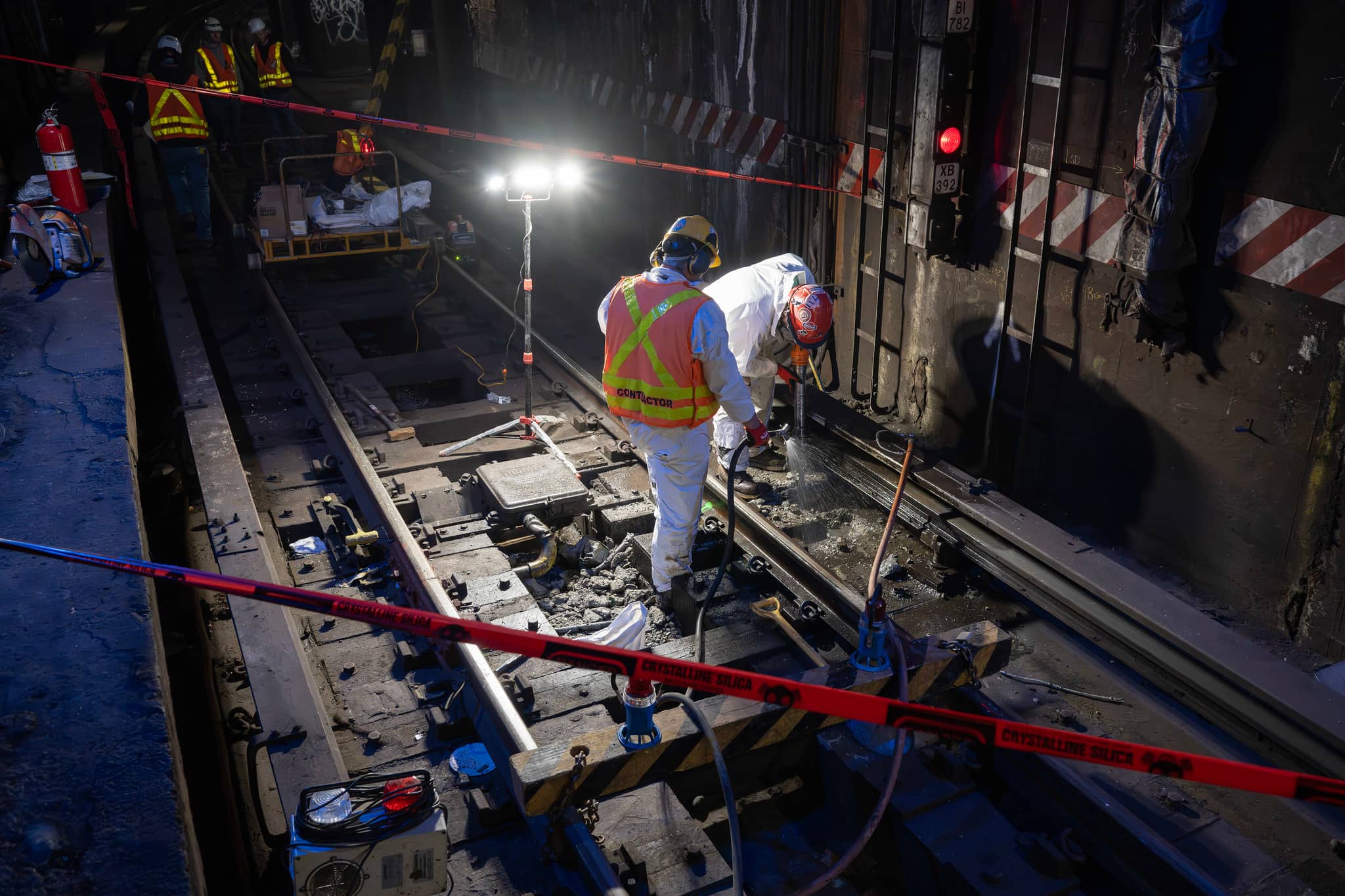
The MTA plans to install modern signals in all subways by 2050.
Chair Janno Lieber announced the plan to install new signals by 2050.
The antiquated technology that guides subways will be upgraded on every mile of subway track by 2050, MTA Chair Janno Lieber said Tuesday, unveiling a plan to address the leading cause of delays for millions of commuters.
Lieber shared the plan during an event at WNYC’s Greene Space, saying the new signals will change service for the better.
“[We’re] accomplishing what people have talked about in general terms but never really laid a detailed plan for, which is going to resignal the whole damn system, finally,” Lieber said. “This is the key to unlocking more and better service.”
Much of the city’s subway system relies on signal technology that dates back to the 1930s. In some cases, transit dispatchers cannot know the exact locations of trains.
Modern technology, called communications-based train control, uses automated systems to drive trains, allowing them to travel faster and closer together.
Over the last two decades, the transit agency has upgraded the signals on the entire lengths of the L and 7 lines, as well as a section of the F line in Brooklyn. Work is ongoing to modernize the signals on sections of the A, C, E, G and other parts of the F line, but each project is far behind schedule.
But MTA officials say they’ve learned lessons from the ongoing work and are now charting a course to add modern signals to every inch of tracks over the next 24 years. A report published by the transit agency states the 1 and 4 lines in the Bronx will be the next to get signal upgrades. It marks the first time the MTA has announced a plan to modernize subway signals in the borough .
“These are two lines with legacy signal equipment at or well beyond its useful life and due for investment,” the report said.
The numbered lines, which were originally built by the Interborough Rapid Transit Company decades before the MTA was formed, are the oldest train lines in the system. The report also said that rolling out the technology on the 1 and 4 lines will for the first time coincide with “the arrival of new subway cars, allowing us to test and refine the system immediately.”
The new trains will come equipped with CBTC technology, which will shave time off getting the signals up and running.
Alyssa Cobb Konon, deputy chief development officer for planning at the MTA’s construction department, said the transit agency has proven it can install the technology in the subway system while still running trains 24/7 and that it now feels more confident it can implement the new signals systemwide.
The report outlines details of every project the MTA will tackle in each decade leading up to 2050.
In the 2020s, it will continue projects currently undergoing CBTC installation and renew existing modern signals on the L train that are reaching the end of their useful life. In the 2030s, the MTA will bring the technology to 10 additional lines, half of which are the numbered lines. In the 2040s, it will bring CBTC to the seven remaining lines.
“Our approach will be flexible enough to be nimble,” the report said. “If one project gets delayed or other work makes a corridor impossible to modernize for a while, we will pivot to an alternative to constantly deliver better service for riders.”
Source
Gothamist