Right whale population dropped in 2025 after a few years of growth
WBUR
WBUR ·
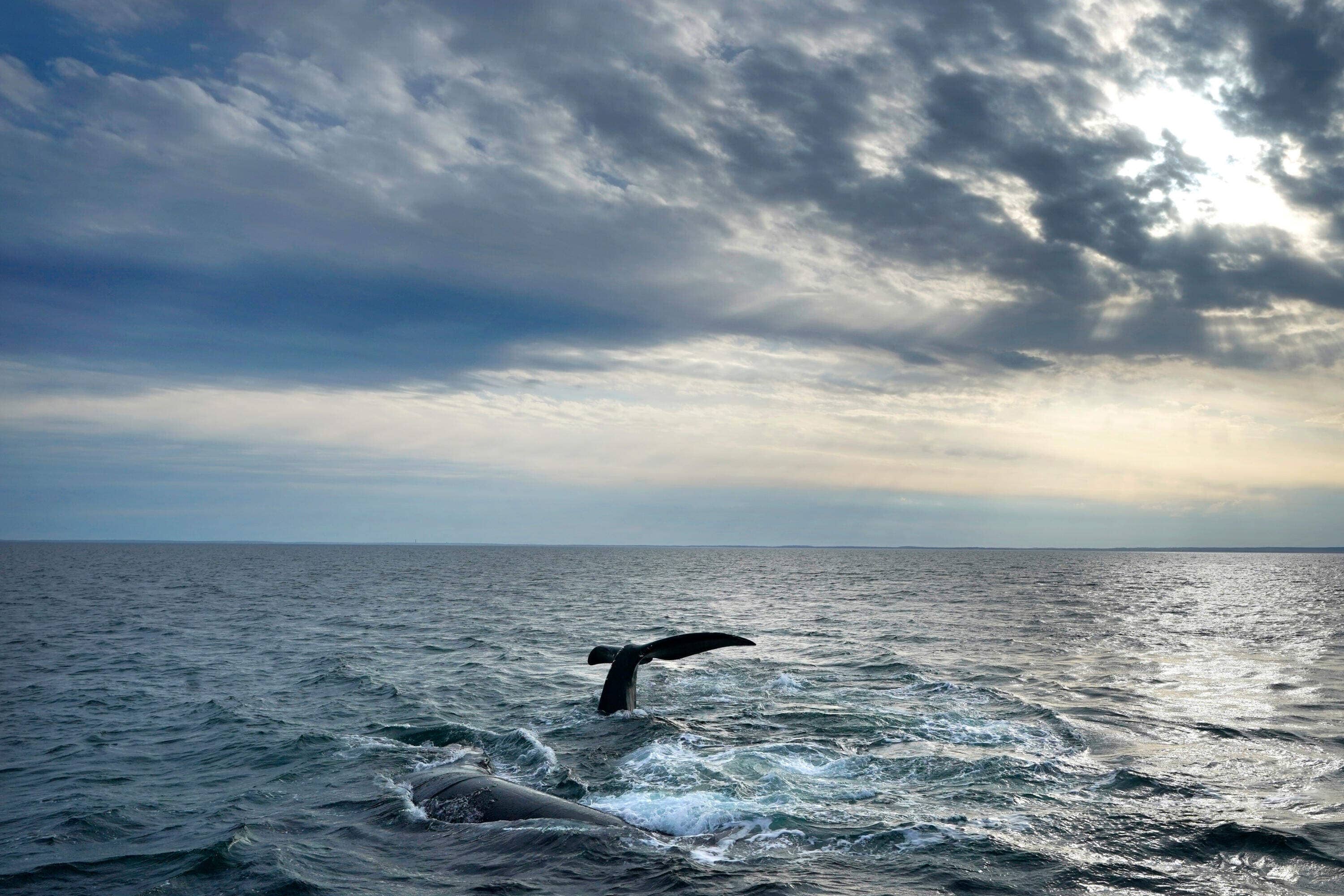
Scientists are watching if this spring's right whale "baby boom" will help bring numbers up. The drop follows several years of slow population growth for right whales, which struggle from threats including ship strikes and entanglement in fishing gear.
The number of critically endangered North Atlantic right whales declined slightly in 2025, according to the latest population report.
The numbers, released Monday by the North Atlantic Right Whale Consortium estimate there were 382 right whales in 2025, down from 389 the previous year.
The slight drop follows several years of slow population growth for right whales. Scientists say the whales continue to struggle from threats including ship strikes and entanglement in fishing gear.
Marine scientist Heather Pettis, who contributed to the annual report, said the new estimate includes a 11-point margin of error, so "it's not the number itself that is cause for alarm."
Counting whales often involves uncertainty, she said. The 2024 estimate was increased from 384 to 389 after new data became available.
But, said Pettis, a senior scientist and chair of the Kraus Marine Mammal Conservation Program at the New England Aquarium, the overall trend is "worrisome."
"It's that lack of sustained growth, combined with continued injuries and mortalities from entanglements and vessel strikes," she said. "That is what gives cause for concern."
Researchers from the New England Aquarium and the National Oceanic and Atmospheric Administration worked together on the annual update.
So far, the 2026 count is looking a bit brighter, due to a record number of babies born during the 2025-2026 calving season. The calf count for that season stands at 24 total, the most born since 2009. (And the next season is off to a solid start, with the first calf spotted off Florida on November 10.)
Three calves came from first-time mothers, which Pettis called "really good news."
"It's always really encouraging to have females give birth for the first time," Pettis said. "The whales are doing their part. What we need is for [the calves] to survive to adulthood and then reproduce."
Right whales give birth off the southeastern U.S. before heading north to New England and Canada to feed. Spotters from Provincetown’s Center for Coastal Studies saw their first right whales off the Massachusetts coast earlier this fall.
The estimated number of reproductive females held steady at 73, which marine ecologist Mark Baumgartner cautioned “is a really low, low number.”
With one catastrophic accident or a couple years of bad feeding, "this population can slide into extinction very, very fast,” said Baumgartner, who studies whale ecology at at the Woods Hole Oceanographic Institution and did not contribute to the population estimate. “That's why we worry about them.”
There have been two known right whale deaths in 2026 so far, according to data from the New England Aquarium. The carcass of a 4-year-old male named Division was found off North Carolina in January following a fishing gear entanglement. In February an unnamed 3-year-old female was found dead on an island off the coast of Virginia. Her cause of death remains unknown.
In addition to the two deaths, there have been eight documented cases of human-caused injuries to right whales this year: seven entanglements and one vessel strike.
Pettis said even non-lethal entanglements can impact a whale's health, ability to reproduce and chances at long-term survival.
The deaths and injuries come amid federal efforts to diminish or delay protections for right whales. Earlier this year, the Trump administration proposed changes that would weaken enforcement of the Endangered Species Act . And in September, the U.S. House of Representatives passed a bill that would delay the implementation of certain right whale protections for several years.
Commercial fishing groups have generally pushed back against tighter restrictions on fishing to protect whales.
"In Massachusetts, we are under the most restrictive conservation rules anywhere, and we have not had one death attributed to Massachusetts commercial lobster gear," said Beth Casoni, executive director of the Massachusetts Lobstermen's Association. She said the group is hopeful that the right whale recovery seen in recent years "will keep going in the right direction."
Source
WBUR