‘The Bottoms’ and an infamous flood get a new place in Denver history
Denverite
Camelia Heins ·
Four historical markers down, 146 more to go.
Today, it’s called Sun Valley. But the neighborhood on Denver’s Westside was once known as The Bottoms — an often overlooked and neglected part of the city.
Now, its long, rich history is set for a small honor: It will host one of the first new historical markers that are set to be installed across Colorado for the state’s 150th birthday.
The Bottoms neighborhood was once nestled along the South Platte River. It was historically home to a bustling residential area with single-family homes, public housing and small businesses, according to History Colorado’s Westside Memory Project .
It has long been one of the city’s most diverse neighborhoods, with Eastern European Jews and later Hispanic communities calling it home over the decades. It has also been isolated and underserved, with the city designating the area as “industrial” in 1925.
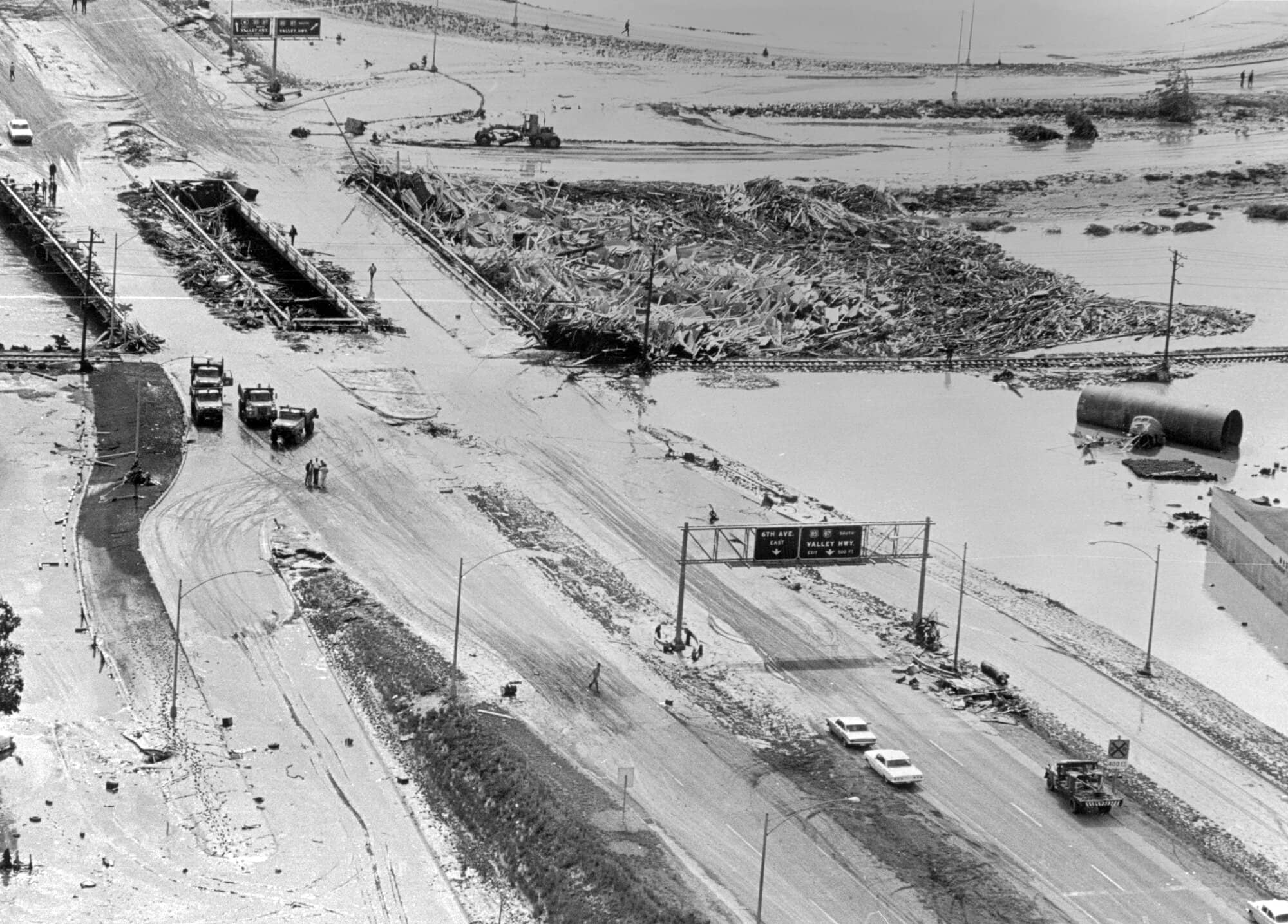
Decades later, the South Platte River flood in 1965 devastated the area, displacing residents. The flood claimed 21 lives and damaged around 2,000 buildings across the city, with estimated losses of $4 billion in today’s dollars. And the displacement continued under Denver’s urban renewal efforts, which resulted in the demolition of blocks upon blocks of homes and businesses around the city.
The new marker will focus in particular on the flood.
“The historic marker commemorates the 1965 South Platte River Flood but, along with the neighborhood, the entire history of the area was lost,” wrote Judy Lucero, who nominated the historic marker, in an email. “The placement of the marker in what is now known as Lower Lakewood Gulch is the spot where the highest wall of water descended. It was witnessed by my father and others who watched from the Colfax viaduct.”
She added that the historical marker dedication “means that all those people, those families, who forged a community with nothing but love and friendship and hard work, people who had nothing but one another, who clung together come — literally — hell or high water, will have a page, a true spot in Colorado history.”
Memories around the state
The Bottoms is one of the first sites to be recognized through a new initiative to place 150 markers in celebration of Colorado’s 150th anniversary of statehood.
Three other sites were also selected in this initial round, including a Buddhist temple in La Jara in Conejos County along with an exploration route in Montrose County. Another marker will be placed in Firestone in Weld County to remember the bombing of a United Airlines flight in 1955, which killed 44 people.
“These first markers demonstrate exactly why this initiative matters. Some of Colorado’s most meaningful stories are found in the communities and landscapes where history unfolded,” said Jason Hanson in a statement, America 250-Colorado 150 commissioner and chief creative officer at History Colorado. “As we celebrate these milestone anniversaries, we’re not just looking back at our history. We’re creating lasting opportunities for future generations to discover it.”
The plan to install 150 historical markers is behind schedule; originally announced in March, the initiative set goals to start installing markers this past summer.
So far, 26 applications have been received, and the exact plans for the first four installations have yet to be announced.
More markers to come
In partnership with History Colorado and funded by the William G. Pomeroy Foundation, the initiative aims to “identify and commemorate significant people, places, and events, expanding the stories represented in Colorado’s historic marker system.”
The marker’s design includes a blue background and a brief description of the place’s significance, including insignia from the America 250-Colorado 150 commission and History Colorado. Each marker is designed by the America 250-Colorado 150 commission.
The commission is still accepting applications for future markers as it pursues its goal to install 150.
Community members, historical societies, Tribal representatives, local governments and organizations are encouraged to apply.
For markers with an anticipated installation next November, applications should be submitted by Jan. 15, 2027. Applications will be accepted for a later deadline in July next year, with those markers to be installed beginning in May 2028.
Approved markers are funded by the William G. Pomeroy Foundation, with coordination from local organizations for installation at selected sites.
Source
Denverite