Intimidated by baking and yeast? Could be time for a little 'Breaducation'
WBUR
WBUR ·
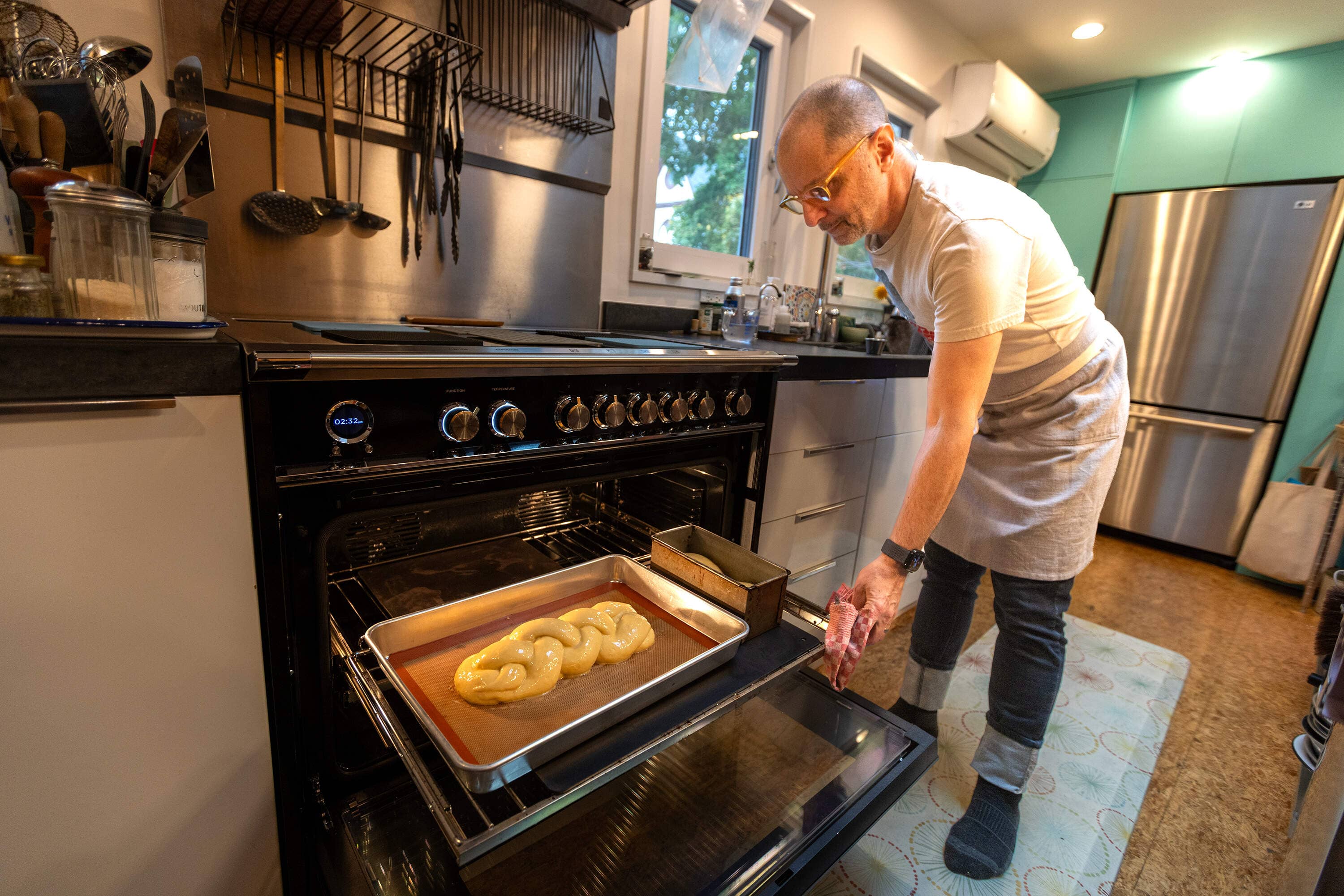
A Cambridge baker’s sourdough starter went viral in 2020, at the height of the pandemic baking boom. Since then, Andrew Janjigian has gone deep into bread science. His new book, “Breaducation,” is a textbook disguised as a cookbook. It’s meant to help home bakers understand the living organisms in their dough and bake with more confidence.
Editor's note: This story is an excerpt from WBUR's weekly arts and culture newsletter, The ARTery. If you like what you read and want it in your inbox, sign up here .
Here’s one for the bread lovers out there. Remember when sourdough went viral during the pandemic? Since then, a Cambridge baker who helped cultivate that movement has been diving deeper into bread science with a mission: help folks make better loaves of all kinds at home.
Andrew Janjigian invited me to the test kitchen inside his house for a little “ Breaducation ” (which is also the name of his new book). When I arrived, yeasty aromas filled the air. The baker peered inside the bowl attached to a spiral mixer that was whirring together his latest experiment.
“I am making Japanese milk bread, otherwise known as shokupan,” Janjigian said.
The dough transformed from sticky to soft and elastic. But it was also green. That’s because Janjigian was trying out some Cambodian pandan powder from the local spice shop Curio .
You could call Janjigian a mildly mad, but benevolent, bread scientist. His laboratory brims with tools that make his process more efficient and precise. He uses a tabletop mill for whole grains (preferably sourced locally), digital scales for precision (no measuring cups here), a misting bottle for moistening, an entire drawer full of scrapers, multiple lames for scoring and digital timers galore.
“And I have my starter whisk,” he added, holding up a stainless steel wand by its wooden handle, “which is a tool I invented.”
Janjigian’s bread starter lives inside a little, white fridge – or “proofer” – designed specifically for living yeast. “It's called the sourdough home,” he said.
Bubbly sourdough yeast sparked the journey Janjigian has been on since 2020. It all started when the explosion of pandemic home baking caused a shortage of flour and dried yeast. So Janjigian – who was then a senior editor at America’s Test Kitchen — turned to an ingredient-saving solution.
For centuries bakers have cultivated their own leavening agents with help from microbes that live on flour and in the air. So Janjigian whisked a small amount of flour with some water inside a petite jar. Then he gave it a cute name: #Quarantinystarter .
“I took a picture, put it on my Instagram, and it went viral almost immediately,” he recalled. “And had I not given it that name it might not have caught fire the way that it did – who can say? And now I have this book.”
“Breaducation” is an extension of Janjigian’s award-winning newsletter, “ Wordloaf .” He designed it to be a textbook disguised as a cookbook. It moves from grain field to loaf, but it’s also loaded with terminology like Maillard reaction, transmutation, hydration and autolyse. Janjigian has a background in organic chemistry, but he never worked in a professional bakery. He wanted to make bread science accessible so people — including himself — could feel more confident while crafting loaves, buns and baguettes at home.
“I tried to cram as much as possible in there while keeping it hopefully not too overwhelming for a beginner,” Janjigian said. “The bulk of the actual research was getting in the kitchen and making things many times over – and failing many times over.”
His primer is filled with his personal experience. He lovingly lays out the life cycles and enzymatic interactions between bread’s basic elements: water, flour and yeast.
“There’s something different about a culinary practice that involves living organisms,” he said, then likened his passion to one shared by people who become farmers or adopt pets. “They like interacting with beings, bread baking is a relationship with beings, and there's just something inherently thrilling about that.”
Janjigian calls caring for the organisms that make bread “microbial (and botanical) husbandry.” In the book he wrote: “They are in control, not you.” Also, “Your number one job is making sure these organisms live their best life.”
Janjigian refreshes (or “feeds”) his yeast starter every morning while the coffee maker heats up.
“When I see what has happened overnight to my starter or my dough it's like Christmas morning every day,” he said. “Maybe sometimes it's not great, like it didn't go the way I wanted it to, but there's a surprise waiting.”
Readers can experience the fruits of Janjigian’s fascination – and practice what they learn – through the recipes he formulated for the book. Some were inspired by or gathered from his bread baking community. Janjigian tested each and every one.
“There's this walnut sourdough which has a bright purple color, and the purple comes from the skins of the walnut,” Janjigian said as he flipped through the book. “Squishy breads which are like burger buns, dinner rolls. And then recipes for what to do with leftover bread.”
Janjigian said writing “Breaducation” forced him to rethink every aspect of his baking, and in many ways he’s humbler and more forgiving than ever. He added he takes comfort in knowing, “There’s always another loaf.”
Andrew Janjigian will be at a slew of upcoming book events , including at Elmendorf Baking Supplies in Cambridge on Dec. 6 and Curio Spice Co. (also in Cambridge) on Dec. 10.
Source
WBUR